Originally Published: January 24th, 2025

Foundation issue guide
What Sellers Need to Understand Before Putting the Property on the Market
If you need to sell a house with foundation issues, the first thing to know is that the property can still be sold. The bigger question is how those structural problems affect price, financing, buyer confidence, and the kind of sale process you are likely to face.
Foundation concerns tend to make buyers cautious because they often point to more than a cosmetic issue. Cracks, shifting, water intrusion, or uneven settling can signal repairs that are expensive, disruptive, and difficult for the average buyer to take on. That changes who is likely to buy the property and how you may need to position it in the market. If you are also comparing local options, you can see how we approach nearby markets like Durham and Hamilton.
Why Foundation Problems Change the Sale So Quickly
Most buyers want predictability. When a house has structural issues, predictability disappears. Buyers start thinking about engineering reports, repair invoices, future movement, drainage problems, interior cracking, and whether the issue may get worse over time. Even if the house still looks livable, many buyers hear “foundation issue” and assume the project may be larger than they want to handle.
That reaction affects more than buyer interest. It can also affect appraisals, inspections, financing approval, and insurance. A seller trying to move a distressed house needs to understand that the challenge is not just finding someone interested in the home. It is finding the type of buyer who is comfortable with the risk and prepared for the condition.
The issue is rarely just cosmetic
Structural concerns tend to affect value, buyer confidence, financing, and how quickly the property can realistically sell.
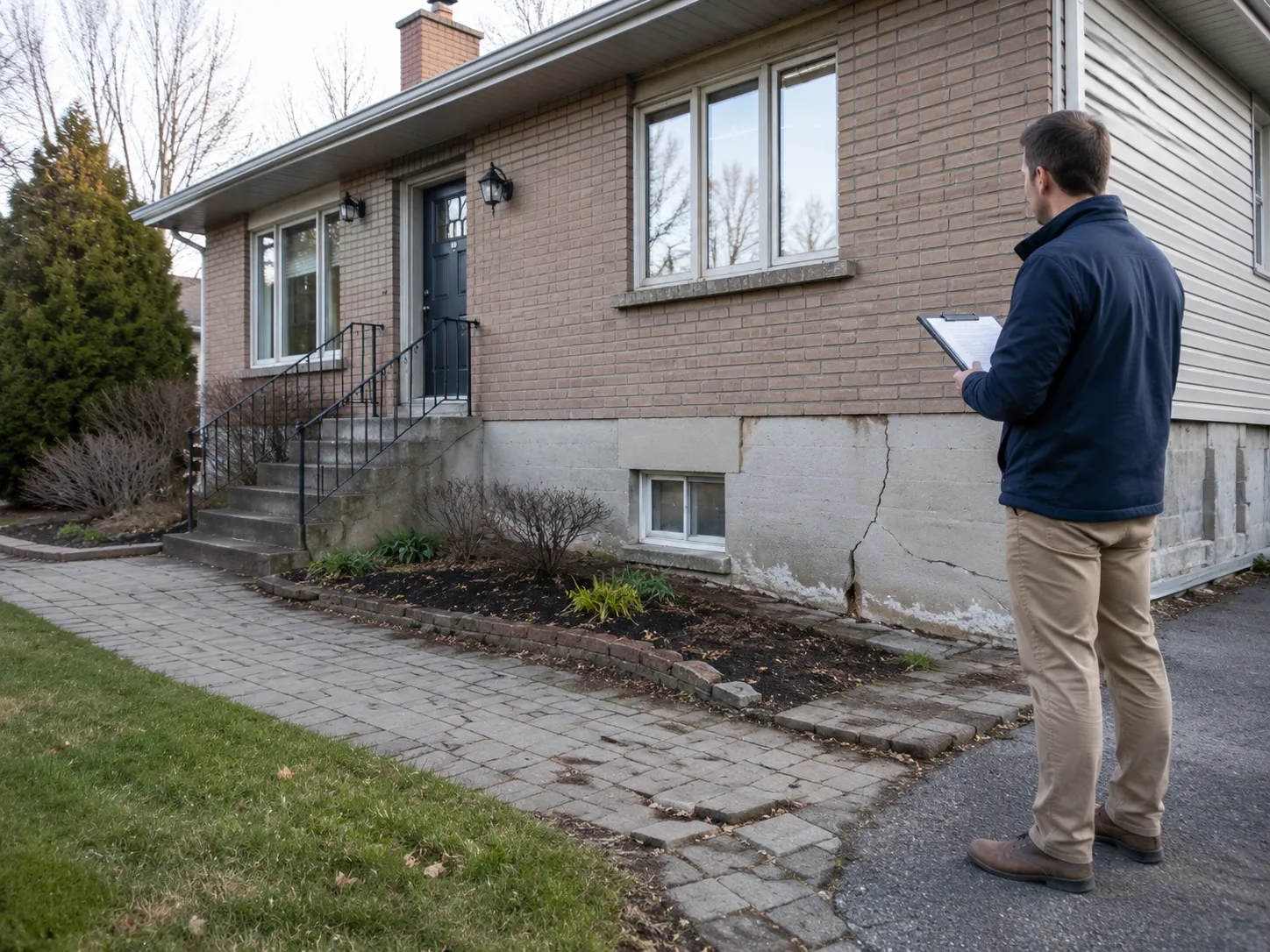
Cracks often raise bigger questions
Visible cracking can make buyers wonder about movement, drainage problems, and the possibility of deeper structural repair needs.
Water can make everything worse
Foundation trouble is often connected to grading, drainage, or persistent moisture, which can increase both cost and buyer concern.
Financing can become harder
Lenders may hesitate when structural issues show up in inspections, which can shrink the buyer pool significantly.
Repairing is often a major project
Structural repairs usually involve specialists, time, cost, and the chance of uncovering additional issues once the work begins.
How Foundation Issues Affect Price
One of the biggest surprises for sellers is how quickly offers can drop once structural concerns are disclosed. Buyers do not just subtract the estimated repair cost from the expected value of the home. They usually factor in the inconvenience, the uncertainty, the project management, and the risk that the problem may be larger than it first appears.
That is why people trying to sell a house with foundation issues often feel like the market is reacting more harshly than expected. Buyers are pricing in risk, not just concrete work or engineering fees.
Why Traditional Buyers Often Pull Back
A typical retail buyer is usually looking for a house they can finance, insure, and move into with confidence. Structural issues can interrupt all three. Once the home inspection raises concerns, many buyers either walk away or start negotiating heavily. Even buyers who want the home may struggle if the lender or insurer becomes uncomfortable with the property condition.
That often leaves sellers focusing on buyers who are more comfortable with distressed houses, including investors and direct cash buyers. This is similar to what many homeowners run into when comparing local markets like Oshawa and Durham, where condition and timeline often matter just as much as list price.
The issue usually affects value from multiple angles
Repair cost matters, but so do risk, financing, time on market, buyer hesitation, and the chance of more work being discovered later.
Your Main Options When Selling a House With Foundation Issues
Repair before selling
If you have the budget, time, and appetite for a major project, repairing the issue first may help the house appeal to a wider buyer pool. This route can make sense when the repair scope is clear and the seller wants to try for a more traditional sale.
List the house as-is
This can work, but buyers may still negotiate aggressively after inspections, and financed offers may still fall apart if the structural concerns are serious enough.
Sell directly
For many distressed properties, a direct sale is the simpler option when the seller wants to avoid repair costs, repeated showings, and the uncertainty that comes with traditional financing.
When Selling As-Is May Be the Better Fit
Selling as-is may make more sense when the repair cost is too high, the timeline is too tight, or the seller simply does not want to manage a major construction project. This can be especially relevant when the property is tied to a larger life situation such as relocation, inheritance, financial pressure, divorce, or a home that has already become difficult to maintain.
If the goal is to move on with less uncertainty, an as-is sale can remove a lot of friction from the process. Instead of waiting through engineering reports, contractor schedules, lender decisions, and buyer hesitation, you focus on finding the right type of buyer for the property in its current condition.
As-is can mean fewer unknowns
For sellers who need certainty more than a long listing process, an as-is sale may be the most practical route.
Who Usually Buys Distressed Houses Like This
In most cases, the strongest buyers for a house with foundation issues are investors, renovators, or direct cash buyers who regularly deal with distressed properties. These buyers are generally more focused on repair scope, resale potential, and total project cost than on whether the home is move-in ready today.
That is why people searching for ways to sell a distressed house often end up comparing a traditional listing against a direct sale. A listing may create broader exposure, but it can also bring more failed deals, more time on market, and more negotiation after inspections. A direct sale often trades some upside for more certainty and less disruption.
Why direct buyers are often a better match
Direct buyers are usually more comfortable evaluating distressed houses based on repair numbers and future value. That often makes the conversation more practical and less emotional than it is with traditional buyers who are comparing the house to move-in-ready homes.
Why time on market can be expensive
The longer a structurally troubled property sits unsold, the more holding costs, maintenance risk, and uncertainty can build up around it. That is one reason many sellers prioritize certainty over waiting.
What Many Sellers Actually Want in This Situation
Most people dealing with foundation issues are not looking for a complicated project. They want a clear answer about whether the property can be sold, what kind of buyer makes sense, and whether repairing the issue is worth the time and money. In many cases, that means comparing the cost of fixing the house against the simplicity of selling it in its current condition.
If you need to sell a distressed house or want to explore options for selling a house with foundation issues, contact SLG Home Buyer. You can also review nearby location pages such as Hamilton if you want to keep users moving through relevant local content. Call 647-694-3409 or use the online form to get started.